Bardo Healing
San Francisco
Fri., June 24: 7-9 pm. Sat-Sun, June 25-26, 9-5 pm 2011
Orgyen Dorje Den, 2244 Santa Clara Ave, Alameda, CA 94501
Los Angeles
Fri, July 15: 7-9 pm. July 16-17: 9-5 pm 2011
Narayan Mandir, Beverley Hills, CA 90290 (register for address).
The Tibetan Book of the Dead

Healing the Departed
Bardo teachings are part of the ancient core of tantric teachings originating in India. Great masters, some among the legendary 84 Mahasiddas, codified these teachings about the after death process from the 4th century on. Passing to Tibet these profound teachings were preserved and perfected within numerous small and large lineages of dedicated scholars, practitioners, yogis and meditators.
These Bardo teachings, how to meditate to both prepare for death and live in luminous awareness, have survived to the present day, and are available to Westerners in a variety of forms.
However, coincident with these teachings are methods of actual guiding the consciousness of others through the perilous and confusing after death journey.
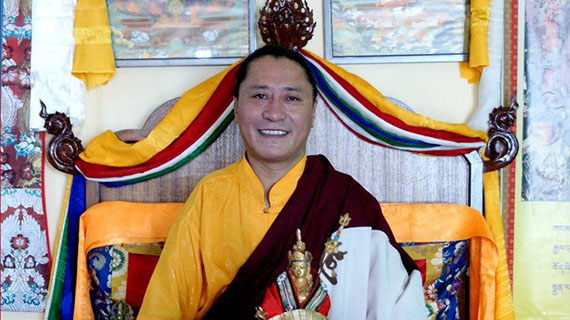
It is these rarely taught methods that will be transmitted in a comprehensive and accessible way by Tsewong Sitar Rinpoche in 2011.
Literature of the Dead
The “Tibetan Book of the Dead,” has become familiar—and popular— in the West through various translations and commentaries. However, the actual rituals that accompany these teachings and make them a living reality, have rarely been taught. This class of teachings, called Neh Dren, follow a precise series of steps to lead the deceased individual to a favorable outcome. At the least, this would be a positive human birth. Better would be entry into a pure realm. And optimally, the departed can achieve full realization at various points in the after death state.
PeGyal Linpga’s Treasure
The various translations mentioned above are almost exclusively based on the work of Karma Lingpa (), athe most widely used reference for all lineages and sects of Tibetan Buddhism. However, these rituals are extremely complex, involved and lengthy, requiring a number of assistants to perform all the manual actions needed during the practice. PeGyal Lingpa, the great treasure-revealor (terton) of modern-day Bhutan, was ever practical, and received an inner transmission of Bardo healing that is precise, concise and powerful.
Within the cycle of Red Vajrasattva, contained within his terma collection of “The Lama’s Intention of the Three Buddha Bodies” is an elegant ritual which can be performed in an afternoon, yet has the same potency and depth as much longer, complex rituals.
The Bardo Healing Process
There are well-defined successive stages of the ritual, which are outlined below to give a sense of this overall process:
1. Creating the Support
Providing a place for the consciousness of the deceased to reside during the healing ritual
2. Summoning the Consciousness
Hooking in and bringing the departed to the ritual from the vast chaos of the Bardo landscape.
3. Freeing From Obstacles
A wrathful clearing of strong negativites and entities that hinder the journey after death.
4. Purifying Stains
Freeing the mind from the mass of negative karma obscuring consciousness, and healing the mind’s five elements (earth, water, fire, air, space) of impurities.
5. Gathering Merit
Generating tremendous positive karmic energy for the the deceased.
6. Offering Prayers
Supplication and requests for assistance.
7. Guidance Through the Realms
The most extensive section, blocking entry into each of the six realms of neurotic being (hell, yidak, animal, human, asura and god’s realm incarnation).
8. Empowerment
An extensive vase empowerment and ordination for elevating the consciousness of the deceased.
9. Sense Offerings
Creating a positive sensory experience and generating the experience of happiness and fulfilment
10. Concluding Section and Dedication
Tuition
$275 at all locations. Pre-registration required, so please contact us!